
Eagles’ Tush Push: Are Referees Turning a Blind Eye? Experts Weigh In on Controversial Play
Sep
Eagles’ Tush Push: Are Referees Turning a Blind Eye? Experts Weigh In on Controversial Play
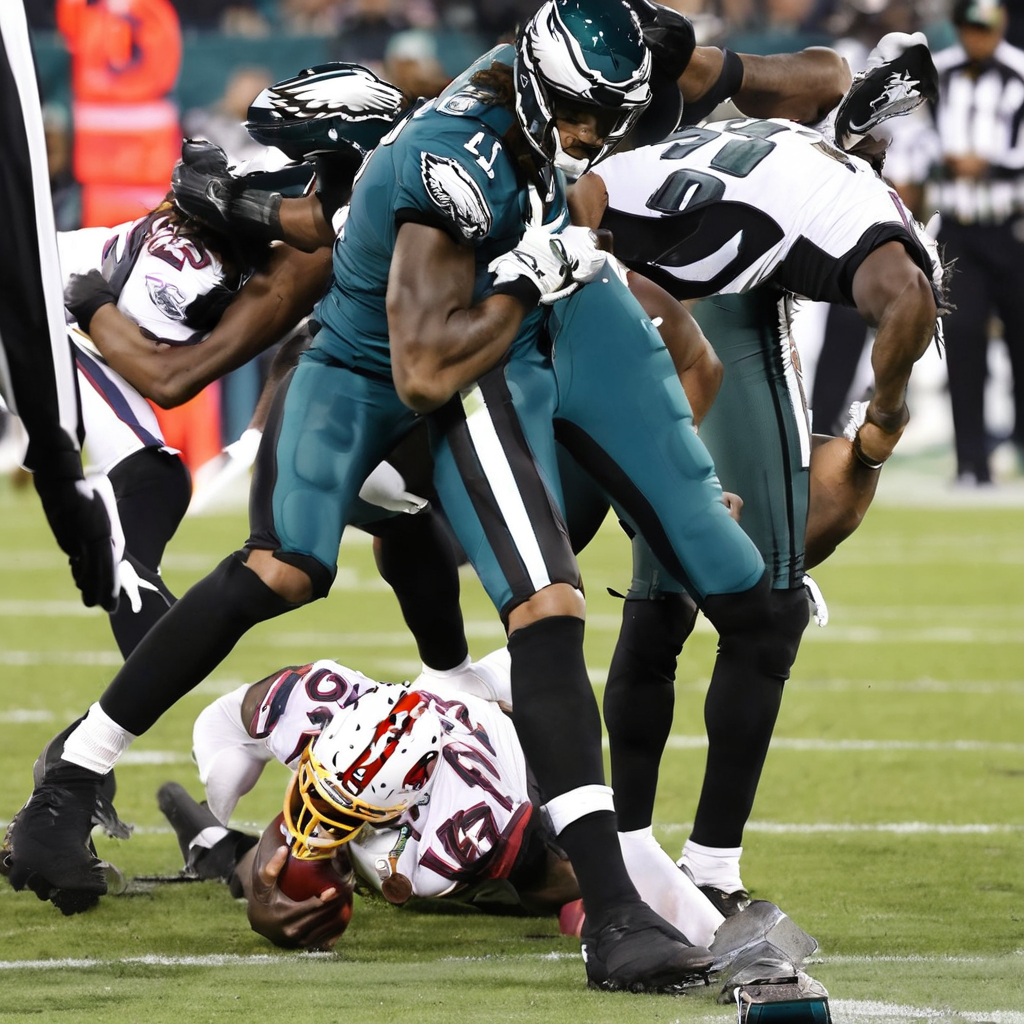
The Philadelphia Eagles’ ‘Tush Push,’ also known as the ‘Brotherly Shove,’ has become one of the most talked-about and effective plays in the NFL. Its near-unstoppable success rate has led to intense scrutiny, with many questioning whether the Eagles are skirting the rules, particularly regarding illegal formations and false starts.
Former Eagles center Jason Kelce, a linchpin of the play’s execution for years, recently alluded to the Eagles potentially getting away with early movements. While not explicitly accusing his former team, his comments have reignited the debate surrounding the play’s legality. Others in the media have been far less reserved, pointing to instances where Eagles linemen appear to move before the snap, a clear violation of NFL rules.
So, are referees turning a blind eye? It’s a complex question with no easy answer. Proponents of the play argue that the close proximity of the linemen during the Tush Push makes it difficult to discern subtle movements. They suggest that referees are giving the benefit of the doubt to the Eagles, especially in crucial short-yardage situations. After all, officials often hesitate to call penalties that could drastically alter the outcome of a game.
However, critics contend that even subtle movements provide a significant advantage, allowing the offensive line to generate more power and push the quarterback forward with greater force. They argue that enforcing the false start rule is paramount to maintaining the integrity of the game, regardless of the play’s popularity or effectiveness. Furthermore, the unique nature of the formation, where linemen are almost interlocked before the snap, necessitates even stricter scrutiny, not leniency.
Several NFL analysts and former referees have weighed in on the controversy. Some believe that the league needs to issue clearer guidelines regarding the interpretation of the false start rule in the context of the Tush Push. Others suggest that the league should consider modifying the rule altogether, potentially restricting the formation or prohibiting the pushing aspect of the play.
Ultimately, the future of the Tush Push remains uncertain. While the Eagles have undoubtedly mastered the art of executing the play, the ongoing debate surrounding its legality may force the NFL to intervene. Whether through stricter enforcement of existing rules or through rule modifications, the league must address the concerns raised by players, analysts, and fans alike to ensure fair play and maintain the competitive balance in the NFL.